Showing posts with label Richard Hamilton. Show all posts

Sunday, 27 March 2022

Richard Hamilton : part five

How important is music to your poetry?

It’s important. It’s like the veins, connective tissue, or interstitial fluid. It can carry one’s “story” or anti-story. Cacophony and euphony elucidate themes in the work, for example. Think about Robert Hayden’s famous poem, Those Winter Sundays. The repetition of consonant letters in “blue black cold,” “cracked hands,” “breaking,” and “chronic angers” taken together help us register the anger and love of the speaker’s father whose house, not unlike the father, thawed daily amid indifference and class-based racial animus. 

Sunday, 20 March 2022

Richard Hamilton : part four

What other poetry books have you been reading lately?

John Ashbery, Collected Poems 1956-1987

Diane Di Prima, Revolutionary Letters 

Tongo Eisen-Martin, Blood on the Fog 

Adrienne Rich, Collected Poems 1950-2012

Gwendolyn Brooks, Selected Poems 

John Keene, Punks 

Kim Hyesoon, Autobiography of Death

Essex Hemphill, Ceremonies: Prose and Poetry

Wanda Coleman, American Sonnets 

Sunday, 13 March 2022

Richard Hamilton : part three

What poets changed the way you thought about writing?

Langston Hughes and W.H. Auden were among those poets writing in the 1930s whose penchant for anti-racist, anti-war, and anti-fascist ruminations feed me. Their essay writing on poetry and politics are instructive. Gwendolyn Brooks and Amiri Baraka (LeRoi Jones), not unlike Malcolm X, gave me a sense that one’s writing life and political commitments are not static. Fred Moten’s cerebral musings are always generative. I return to Aimé Césaire’s Discourse on Colonialism often.

Sunday, 6 March 2022

Richard Hamilton : part two

What do you find most difficult about writing poetry?

It’s like corporations and privately funded poetry organizations with huge endowments have set the tone for writing in the age of MacArthur Genius Awards. The competition is stiff. It would follow, for some, that the pressure to write to establishment tastes is grave. Or conversely, the push to make writing uber-strange, to stand out in a crowded field is paramount to increasing one’s chance at licking the money pot. I have to remind myself of the subaltern network of independent publishers and writing that is not looking for literary citizenship. It knows that many of us are born to a republic and “sacred” constitution shot through with racism. In the US, some of our greatest heroes were impugned by Joseph McCarthy and his ilk for leading international movements to expose the racist and anti-working-class interests of the keepers of American law. I would say writing in this age requires you know what’s afoot in the industry while somehow not being consumed or crippled by what might read as corruption or corrupting forces.

Sunday, 27 February 2022

Richard Hamilton : part one

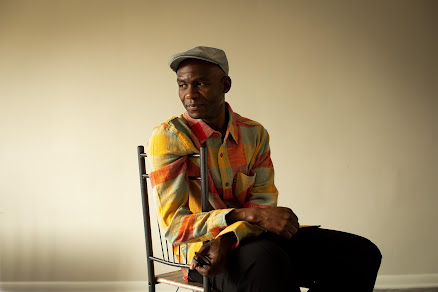
Richard Hamilton was born in 1975 and grew up in Elizabeth, New Jersey and Columbus, Georgia. He is the author of Rest of US published by ReCenter Press (2021) in Philadelphia. Hamilton is the recipient of fellowships and support from the Vermont Studio Center in Johnson City, Vermont and the Cave Canem Foundation in Brooklyn, NY. He lives in Washington, D.C. 

What do you feel poetry can accomplish that other forms can’t?

Pork. Egg. Fair pay. Poetry is a weapon. It’s a bruised vegetable reconstituted. It does what other writing forms, in some cases, take longer to do. It aerates subjects and complicates a given argument. It makes things strange to loosen or tighten the strangleholds on us, real and imagined. It does so to evoke, to arm, to muddy, make clean, hold to account, or leave for witness. My own writing takes the history of race relations and working class replies to exploitation seriously.