Friday, 19 November 2021

Sara Moore Wagner : part five

How does a poem begin?

A poem begins with time. I am a mother of three. For me it’s always time. I have so many ideas that never reach the page. I try very hard to make space for my writing life, but the day gets away a lot of times. If I have time I can force a poem to begin. 

I used to say I needed a spark, but now a poem begins when I tell it to. I try to collect images in my mind and when I sit down to write (when I have a small space to write), I will start with one of those. If I hit a wall, I will read until it generates a unique thought or image.  This is true especially for my work on Annie Oakley. I will listen to “Annie Get Your Gun” or read about her or look at pictures of her until an idea forms. 

Kevin Prufer : part one

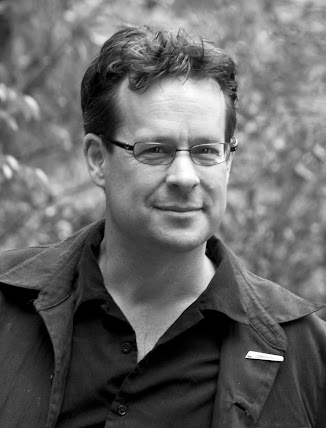
Kevin Prufer’s seventh book How He Loved Them (Four Way Books, 2018) received the Julie Suk Award and was long-listed for the 2019 Pulitzer Prize.  His eighth book, The Art of Fiction, was published this year by Four Way Books.  He teaches in the graduate Creative Writing Program at the University of Houston where he also curates the Unsung Master Series, a book series devoted to bringing great, forgotten authors to new generations of readers.

Photo credit: Emy Johnston

How did you first engage with poetry?

I went to a classy boarding school—ivy-covered red brick, wealthy kids, grave faculty masters who doled out punishments for dress code violations and other misbehaviors.  We ate dinner in our green school ties beneath ancient portraits of faculty masters of the past.  I had one teacher who required that we memorize a poem each week.  Every Saturday, we sat in class and wrote the poem out longhand.  For each error—a missed comma, a forgotten word—we lost a grade.  And every poem he gave us was longer than the previous one.   I’m not sure what the objective of all this was.  Perhaps we were meant to learn comma rules this way, because no one could memorize the placement of every comma in “My Last Duchess”; one had to know the rules.  I don’t think these assignments awakened any interest in the other students, most of whom seemed to me to be destined to go on to great jobs in banking, medicine, or law.  And I complained like everyone else, though the poems took root inside me and grew there.  The rhythms, the odd rhymes, the wonderful pair of ragged claws scuttling across the silent sea floor.

Peter Vertacnik : part three

What other poetry books have you been reading lately?

Three very new books (all published in 2021) by poets whose previous work I enjoyed immensely: Popular Longing, by Natalie Shapero; Prometeo, by C. Dale Young; and Caki Wilkinson’s The Survival Expo.

I’ve also been revisiting older books that I’ve only ever read as part of a poet’s collected poems, except now (with the help of an excellent university library system) I’m encountering these books as they were first published, in individual collections. Some recent examples would be Elizabeth Bishop’s Questions of Travel, Theodore Roethke’s The Lost Son, Louise Bogan’s Dark Summer and Robert Francis’ Like Ghosts of Eagles. Seeing these poems surrounded by more space (aren’t collecteds and selecteds always filled with crowded pages?) often helps me see them differently, more fully. There’s also surprises, such as realizing Bishop included her story, “In the Village” at the beginning of the ‘Elsewhere’ section in QoT.

And, of course, I’m always dipping into old favorites, one poem or sequence at time: Auden, Brooks, Frost, Hardy, Hecht, Merrill.

Thursday, 18 November 2021

Kerry Ryan : part four

How important is music to your poetry?

I’m tone deaf and have zero musical ability, but I love listening to music, especially singer-songwriters who really work their lyrics. Listening to music, especially live, makes me itch to write, but I can’t actually write while there’s music playing. I get too caught up in listening and can’t hear what’s on the page. My work doesn’t have a particularly musical sensibility, but I like to work with sound, especially consonance and assonance, subtly repeating and recombining sounds. 

Douglas Cole : part one

Douglas Cole has published six collections of poetry and The White Field, winner of the American Fiction Award. His work has appeared in several anthologies as well as journals such as The Chicago Quarterly Review, Poetry International, The Galway Review, Bitter Oleander, Chiron, Louisiana Literature, Slipstream, as well Spanish translations of work (translated by Maria Del Castillo Sucerquia) in La Cabra Montes. He is a regular contributor to Mythaixs, an online journal, where in addition to his fiction and essays, his interviews with notable writers, artists and musicians such as Daniel Wallace (Big Fish), Darcy Steinke (Suicide Blond, Flash Count Diary) and Tim Reynolds (T3 and The Dave Matthews Band) have been popular contributions https://mythaxis.com/?s=douglas+Cole. He has been nominated twice for a Pushcart and Best of the Net, received the Leslie Hunt Memorial Prize in Poetry and recently won the Editors’ Choice Award in Prose from RiverSedge literary journal. He lives and teaches in Seattle, Washington. His website is https://douglastcole.com/.

What are you working on?

I’m working on a collection called The Cabin at the End of the World that is made up of mostly prose poems. It’s a fun way to approach the poem, formally. I’ve always felt that there really is not a big difference between writing poetry and prose. I love them both: the challenge of working with language, the music of language, the play of meanings and the creation of a visual as much as an intellectual experience are essentially the same. Certainly “narrative” poetry has a prose quality in the sense that it has a sort of story in it. And I love the way the line of a poem can be a poem, as Theodore Roethke says. So the fun of working on pieces as prose poems has been a new freedom in terms of the line, but I’ve also been secretly trying to play with the line yet still have the appearance of a paragraph, the prose poem, this block of language.

Wednesday, 17 November 2021

Abigail Wender : part one

Abigail Wender’s poetry collection, Reliquary, was published in February 2021 (Four Way Books). Her translation from the German of The Bureau of Past Management, Iris Hanika’s award-winning novel, was published in October 2021 (V & Q Books). Poetry and translations were published or are forthcoming in Asymptote, Bodega, The Cortland Review, Disquieting Muses Quarterly, Epiphany, Kenyon Review Online, Massachusetts Review, New Orleans Review, No Man’s Land, SWIMM, Tupelo Quarterly, among others. She lives in New York City.

Photo credit: Rachel Eliza Griffiths

What are you working on?

I’m working on a translation of a new German novel by Iris Hanika called Echo’s Chambers. Our first effort, The Bureau of Past Management, was published in the Germany and the UK in October 2021. Hanika is a poetic fiction writer, and there is a lot of poetry in her work. This book begins, for example, with a 1937 poem by Daniil Charms. It floored me—I’ll be looking for more of his work. The poem begins:

“Is there anything in the world that has meaning and might even change the course of events, not only on Earth but also in other worlds?” I asked my teacher.
“Yes,” answered my teacher.
“And what is it?” I asked.
“It is…” began my teacher and suddenly fell silent.


Angelo Mao : part three

When you require renewal, is there a particular poem or book that you return to? A particular author?

I love the energy from reading young, contemporary poets. To somehow respond to each other, whether stylistically or in terms of poetic subject, is, I think, a healthy and energizing challenge.

Partly because I was in her workshop for many years, I revisit Jorie Graham’s poems, if only to remind myself of her voice—not just the voice in her poems, but her “real life” voice reminding us in workshop to attempt what really matters. The challenge is never: write a poem. Instead, try to create a document of being human. I feel it’s a liberating and democratic attitude to take, and opens the space of what texts and shapes of texts to consider.

I also derive a strong sense of renewal from Yeats’s poems, especially those from the second half of his career. I probably have a lot of sympathy with his sensibility, and—although certainly the situations were different—his poems of the Irish Civil War were helpful to me during the Trump presidency.