Has your consideration of poetry changed since you began?
I used to think I knew things that I should tell people about: where I came from, what my experiences in the world were, etc. Now I think it’s more about what I don’t know. Now I am moving towards something else. This from Layli Long Soldier: "And whereas one of my students asks a visiting poet about education vaguely getting at what is worth practicing? The poet suggests looking at whatever is/was missing in one's life and begin there."
Showing posts with label Connie Voisine. Show all posts
Showing posts with label Connie Voisine. Show all posts
Tuesday, 4 December 2018

Tuesday, 27 November 2018
Connie Voisine : part four
What do you find most difficult about writing poetry?
Once I find the line of a poem, the rest of it all kind of slides into place. But until I do, tone is messy, the images don’t necessary cohere, and the poem floats around like some kind of amoeba with me twisting the focus this way and that, closing one eye to see better, walking away.
Also, I don’t enjoy being done with a poem. I feel as if it’s over, our sweet little troubled relationship, and I won’t have that experience again. I miss the poem when I am done
Once I find the line of a poem, the rest of it all kind of slides into place. But until I do, tone is messy, the images don’t necessary cohere, and the poem floats around like some kind of amoeba with me twisting the focus this way and that, closing one eye to see better, walking away.
Also, I don’t enjoy being done with a poem. I feel as if it’s over, our sweet little troubled relationship, and I won’t have that experience again. I miss the poem when I am done
Tuesday, 20 November 2018
Connie Voisine : part three
What poets changed the way you thought about writing?
Anne Carson taught me how to think in a poem.
Gwendolyn Brooks taught me how to think and sing.
George Herbert taught me how to doubt in a poem.
Anne Carson taught me how to think in a poem.
Gwendolyn Brooks taught me how to think and sing.
George Herbert taught me how to doubt in a poem.
Tuesday, 13 November 2018
Connie Voisine : part two
What are you working on?
I had a chapbook come out recently and a book is being printed as I type. I have been wanting to tell a long story about addiction, about opioids in rural America (where I am from) and the women who keep their children alive. I don’t know where that is going or how it’s going to happen, but mostly I don’t understand these days the border between fiction and nonfiction.
I had a chapbook come out recently and a book is being printed as I type. I have been wanting to tell a long story about addiction, about opioids in rural America (where I am from) and the women who keep their children alive. I don’t know where that is going or how it’s going to happen, but mostly I don’t understand these days the border between fiction and nonfiction.
Tuesday, 6 November 2018
Connie Voisine : part one
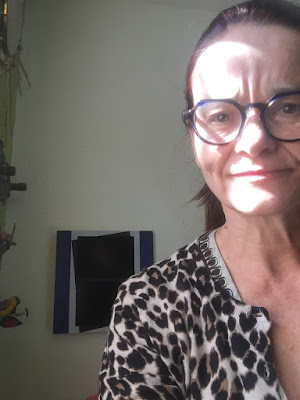 Connie Voisine is a poet living in New Mexico. Her recently published chapbook is And God Created Women, and she has a book-length poem, The Bower, forthcoming in 2019.
How does a poem begin?
It begins with an image, an acute sense of description, that this image is felt in more dimensions than I actually know. The thinking comes later—why is a man who knocks at my door one afternoon compelling to me? How is that tactile, sensory, human moment unbearably real to me? Why? The language comes out of that overwhelming sensory experience, and revision reveals the significance of it.
Subscribe to:
Posts (Atom)