Monday, 28 February 2022

Simon Brown : part three

What poetry books have you been reading lately?

So many… new and old, good and bad, haha. But mostly very good! One of the books I’ve been really appreciating in the past few weeks is Black Dog Songs (Flood Editions, 2003), an older collection (which I somehow hadn’t read yet) from one of my favourite poets, Lisa Jarnot. It’s a mix of repetitive/collage-y prose pieces, and other short versified poems, almost like nursery rhymes. Very simple, yet containing whole huge dreamworlds within. I’ve also been reading the amazing new collection by Maude Pilon, Blanche Reboot (Éditions Omri, 2022), where she reworks poems by early 20th-century regionalist poet Blanche Lamontagne, transforming odes to the fields and streams of the Gaspé into what you might describe as lyrical hallucinations: sometimes funny, sometimes touching, always strange and beautiful. I’ve also been reading a couple of random missals and prayer books I recently found in the garbage. Oldies but goodies, I guess.

H.E. Fisher : part one

H.E. Fisher’s poetry, prose poems, and essays appear or are forthcoming in Whale Road Review, Novus, The Rumpus, Pithead Chapel, Longleaf Review, Miracle Monocle, Anti-Heroin Chic, Indianapolis Review, and Canary, among other publications. She has twice been nominated for Best of the Net. H.E. is the editor of (Re) An Ideas Journal. Her first collection, STERILE FIELD, a hybrid, (Free Lines Press) and poetry chapbook, JANE ALMOST ALWAYS SMILES (Moonstone Press), are forthcoming in 2022. 

How did you first engage with poetry?

I grew up in a house with lots of books. I remember poems being read to me as a small child. One of my brothers, who is ten years older than me, wrote poetry. It seemed like poetry was always around. I wrote poems in high school and then at Purchase College as an undergrad, which is when I first read Emily Dickenson, the Romantics, Shakespeare’s sonnets. The summer before my senior year in college, I found a book on my family’s bookshelf called The Zig Zag Walk by a beat poet named John Logan. One of the poems in the book is called “Lines for Michael in the Picture”. This was really the first time I read a (fairly) contemporary poem. And it blew my mind. It’s a long poem, but the language was accessible and relatable. I loved the music of the poem. Whatever that thing is that poetry does, really got its claws into me. Though it wasn’t until I began pursuing my MFA at City College of New York and took a class on prosody with the program’s director and poet, Michelle Valladares, that I began concentrating more on writing poetry. There’s a 35 year gap between reading John Logan and being in Michelle’s class. 

Sunday, 27 February 2022

Elizabeth Johnston Ambrose : part one

Elizabeth Johnston Ambrose’s writing appears in The Atlantic, Rattle, Women Studies Quarterly, Feminist Formations, Room, and McSweeney’s, among many others. She is the author of two chapbooks, Wild Things (Main Street Rag, 2021) and Imago, Dei (winner of the 2021 Rattle Chapbook Poetry Prize), and the co-editor of two poetry chapbooks out of Foothills Press.  Her poem, “After My Teenager Tries…,” was one of 10 finalists out of 15,000 entries for the 2021 Rattle Poetry Prize. Her writing and scholarship focus on literary, mythological, and cultural representations of female identity and gender-based violence. She teaches courses in Creative Writing, Women in Literature, Women in Popular Culture, Female Iconicity, and Girls Studies in Rochester, NY, and was a recipient of the 2015 SUNY Chancellor’s Award for Excellence in Teaching and the 2017 SUNY Traveling Lecturer Award. Co-founder of the four-woman collective Straw Mat Writers, she also facilitates a writing-as-therapy group for breast cancer survivors. Elizabeth lives in Rochester, NY, with her partner, Brian, their daughters Ava and Christina, and five unruly rescue animals. You can read more about her work at her website elizabethjohnstonambrose.com and find her on Twitter @libbyjohnston74.

What are you working on?

I have long been fascinated by female icons from literature and popular culture; increasingly, my academic interest in the ways myths about gender and sex are produced, circulated, and cemented has found its way into my poems. And because I am the daughter of two redheads, the daughter-in-law of a redhead, the eldest of four redheaded siblings, and the mother of two redheads, it’s no wonder that I have recently found myself drawn to literary and cultural representations of redheaded girls and women. 

The poetry collection that I’m working on (my first full-length!) meditates on the redhead as a cultural phenomenon, and, in particular, the redheaded girl/woman as a site of longing, fear, and fantasy. Why does Edward Munch imagine Sin as a redhaired woman? Why is the sexually promiscuous woman Gulliver encounters on the island of the Hounhyms a redhead?  How was Queen Elizabeth I's power (or imagined monstrosity?) connected to the color of her hair (the Scots referred to her as “the red hag”)?  What lies behind the Pre-Raphaelite impulse to imagine both the Virgin Mary and the prostitute Mary Magdalene as redheads?  

I also decided on a unique way of organizing the book. MC1R, which is the gene for redheads, maps to chromosome 16q24.3.  This means it is located on the long arm of chromosome 16, in position 24.3 Accordingly, my poetry book (which is still in its nascent stage) will contain 24 poems, split into three sections, with the 16th poem being the longest. Section one will focus on historic redheads from literature and popular culture, for example Orphan Annie, Lilith, Queen Elizabeth 1, Sylvia Plath, and The Little Mermaid. Section two will feature poems which each begin with an epigraph of a scientific “fact” (some examples: redheads have more sex; redheads feel less pain and require more anesthesia; redheads are conceived when a woman has sex on her period). The third section will be narrative poems based in my biographical experience. I have also created a new form based on this science called the MC1R form; a small portion of the poems in this collection will follow that form.

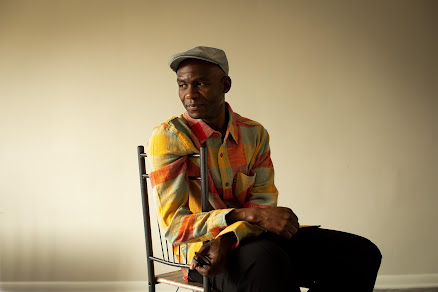
Richard Hamilton : part one

Richard Hamilton was born in 1975 and grew up in Elizabeth, New Jersey and Columbus, Georgia. He is the author of Rest of US published by ReCenter Press (2021) in Philadelphia. Hamilton is the recipient of fellowships and support from the Vermont Studio Center in Johnson City, Vermont and the Cave Canem Foundation in Brooklyn, NY. He lives in Washington, D.C. 

What do you feel poetry can accomplish that other forms can’t?

Pork. Egg. Fair pay. Poetry is a weapon. It’s a bruised vegetable reconstituted. It does what other writing forms, in some cases, take longer to do. It aerates subjects and complicates a given argument. It makes things strange to loosen or tighten the strangleholds on us, real and imagined. It does so to evoke, to arm, to muddy, make clean, hold to account, or leave for witness. My own writing takes the history of race relations and working class replies to exploitation seriously.

Saturday, 26 February 2022

Maryann Corbett : part one

Maryann Corbett earned a doctorate in English from the University of Minnesota and expected to be teaching Beowulf and Chaucer and the history of the English language. Instead, she spent almost thirty-five years working for the Office of the Revisor of Statutes of the Minnesota Legislature, helping attorneys to write plain English and coordinating the creation of finding aids for the law. She returned to writing poetry in 2005, after thirty years away from the craft, and is now the author of two chapbooks, five full-length books of poetry, and a forthcoming book. Her work has won or has been shortlisted for the Able Muse Book Prize, the Hollis Summers Prize, the Howard Nemerov Sonnet Award, the Morton Marr Prize, the Richard Wilbur Award, and the Willis Barnstone Translation Prize and has appeared in journals on both sides of the Atlantic as well as an assortment of anthologies, including The Best American Poetry 2018. Her poems have been featured on Poetry Daily, Verse Daily, American Life in Poetry, The Writer's Almanac, and on the Poetry Foundation website.

Photo credit: Mims Photography, St. Paul, MN

How did you first engage with poetry?

I’m not sure how early “first” is, or what exactly “engage” means, so I’m going to interpret those words broadly. I grew up in an era in which poems still appeared in magazines, and I recall that I aped one such poem—rhymed and in tetrameter—somewhere in the early grades and was praised to the skies. My eighth-grade teacher—I think she must have been working on a master’s at the time—exposed us to scansion, the names of the feet and meters, and a lot of Frost and Hopkins, among many other anthology standards.  High school AP English courses probably sealed my decision to study English later on.

I’m not sure why my teenage poems were in free verse, but I hope they’ve all been destroyed. (To be clear, I like to read free verse, but writing it doesn’t come naturally to me.)

Apart from one college-era poem (in iambic pentameter) I then left the writing of poetry alone for decades, earning the usual BA, MA, and PhD, specializing in medieval literature and linguistics, and aiming to be a scholar rather than a writer. 

But a scholarly career was not in the cards, and for about thirty-five years I worked for the the Revisor’s Office, helping to draft bills and create and edit indexes. Because that office was very strictly nonpartisan, I had to avoid saying anything in public that could be interpreted as favoring a political stance. I stayed quiet for a long time.

I think I’ll leave the story of ceasing to be quiet for one of your other questions.

River Elizabeth Hall : part two

How do you know when a poem is finished?

That’s a tough one. To me, “finished” is sometimes an ephemeral sensation. It happens in so many ways. Sometimes, I agonize until I just can’t polish a poem any further and I have to force myself to walk away. Sometimes, it feels like the tuning of an orchestra— each refinement a twist of the strings until all the words, the line breaks, the punctuation, the shape,  and the title sing together in harmony. Other times, I over-tune my poems and then I have to let them rest until I can see why it feels off. I then go back and loosen them up a bit. 

Very rarely, a poem lands with clear certainty and I know that it’s there. It’s so hard to explain. As well, there have been times that a poem has felt finished, and then I picked it up again much later only to see that something clearly needed to change. I’m not sure if I really believe in finished. “Finished” feels closed and I always want to remain open to the possibility that I can take a poem farther. I will never be done growing and changing as a writer (at least I hope not— that’s terrifying to imagine) and so it makes sense that some poems might continue to evolve with me.

All that said, there are pieces that I can’t stand to spend another second contemplating. I think this is especially true for those poems that evoke an emotion I’d like to move past, or poems that declare things I no longer believe. Those can happily exist forever—just as they are—as far as I’m concerned. They’re sort of like that old lower back tattoo you got in college that you’re relieved you can’t see on a daily basis without a mirror.

Friday, 25 February 2022

Matt Robinson : part five

How does a poem begin?

In my process, a poem usually begins with a small thing: a word or a phrase or a fragment of language. Maybe a partially sussed out metaphor. It grows from there. So it begins, and often hones in on and around, bits of detail.

On that note, and I hope this isn’t too much of a tangent: I think there needs to be a level of detail and a certain specificity included in a poem and its language and metaphor to ground it. To make it a tangible thing. (I mean, really, for the artful lying of metaphor to work, I think we need enough detail to be able to grasp that our perceptions and understanding are being stretched or flipped or challenged or interrogated. But maybe I am wrong.)

BUT, and this is a big BUT: I think, for me, there ultimately still needs to be a movement — no matter the direction(s) — between those minute, tangible detail(s) in the poem and some kind of greater idea(s). Otherwise it’s just a list, a catalogue of observations. There’s nothing wrong with strictly observational or list-ish poems, but I want a little more. So, a poem starts with a detail, and then moves on from there.

For me, it’s in that liminal, transitional, osmosis-y-tug-of-war sort of dynamic space where things get interesting. That, for me, is where the energy of a poem gets generated. The tension between those two worlds and ways of thinking is at the core of what makes a poem work, in many ways, for me.

I suppose the bottom line is that when I am writing I don’t want a poem or a poetry that deals solely in “big” ideas or issues. I certainly don’t usually “start” there. No matter how important, that seems too airy or ungrounded or something of that sort. Conversely, a simple listing of details or recounting of everyday bits of whatever, seems almost pedestrian. 

There are, of course, writers who do both of those discrete things very well — better than I ever could — but that isn’t how I am wired to compose or communicate. I’m interested, I guess in the ever-shifting relationship between the everyday domestic and quotidian details of things and how the accumulation of them, their interplay, speaks to what we have constructed as larger truths or something. I want, as cliched as it is, the sum to be greater than the (catalogued) parts.